
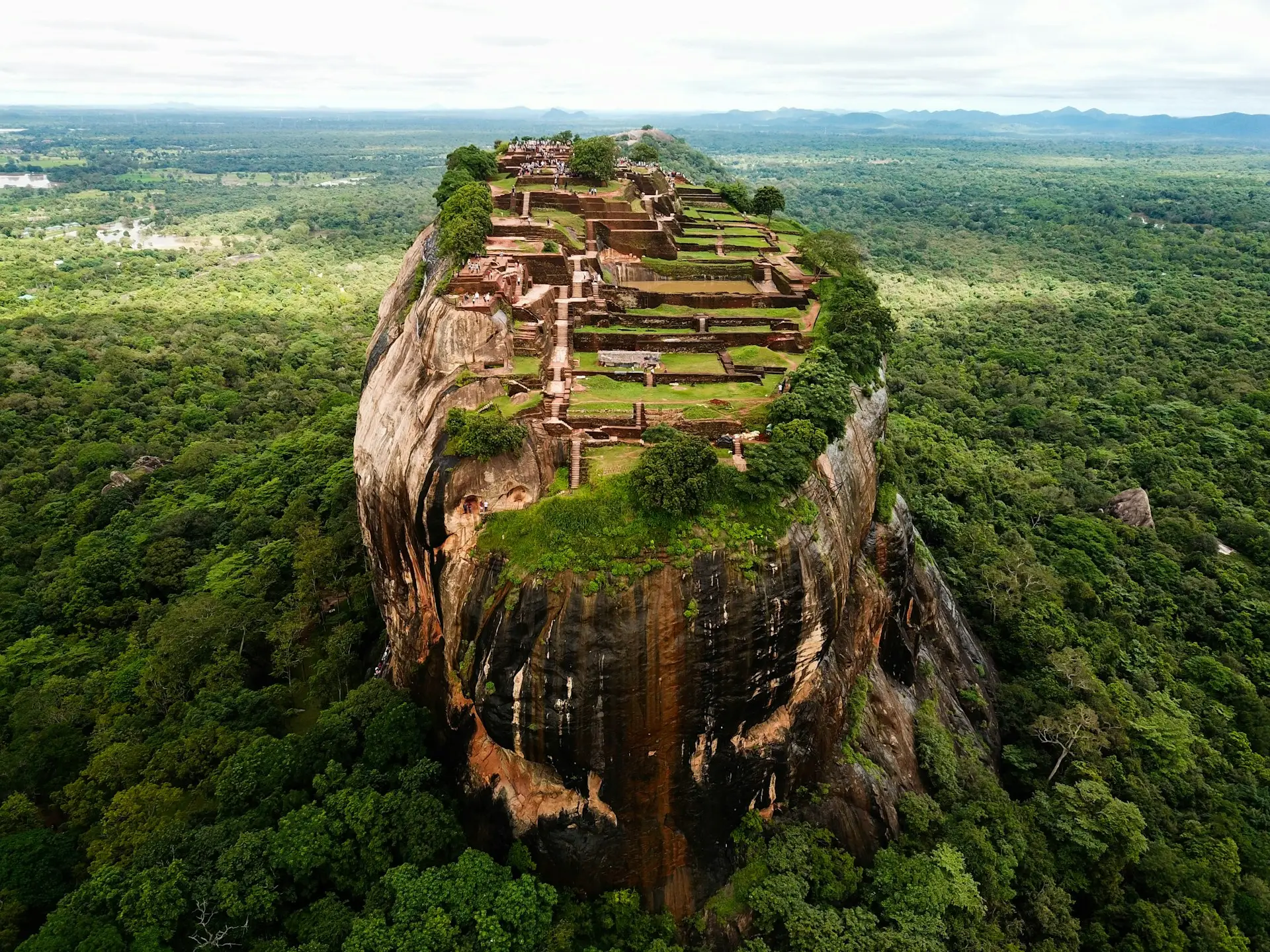
Rising boldly in central Sri Lanka, Sigiriya Rock Fortress—“Lion Rock”—is a UNESCO World Heritage Site famed for its ancient palace and breathtaking views / Credit: Dylan Shaw
Sri Lanka is one of Asia’s most rewarding destinations for history‑focused travel. Across a relatively small area, travelers encounter sacred Buddhist cities, royal capitals, and advanced ancient engineering that spans more than 2,500 years.
Explore Sri Lanka’s Ancient Cities: Living Heritage, Not Just Ruins
Sri Lanka’s ancient cities were once major political, religious, and economic centres. Enormous stupas dominated skylines, reservoirs supported large populations, and monasteries attracted scholars from across the region. These places remain vibrant today. Monks chant at dawn, pilgrims arrive daily, and religious traditions continue alongside archaeological preservation. Visiting Sri Lanka’s ancient ruins is an encounter with history that is still practiced, not frozen in time.
The Cultural Triangle: Sri Lanka’s Archaeological Core
The Cultural Triangle forms the heart of Sri Lanka’s ancient civilization. Anchored by Anuradhapura, Polonnaruwa, and Kandy, and complemented by Sigiriya and Dambulla, this region contains the island’s most significant UNESCO World Heritage Sites. Within a few hours’ drive, travelers can move through centuries of history, from early Buddhist capitals to medieval royal cities and sacred relic shrines that remain central to Sri Lankan identity.
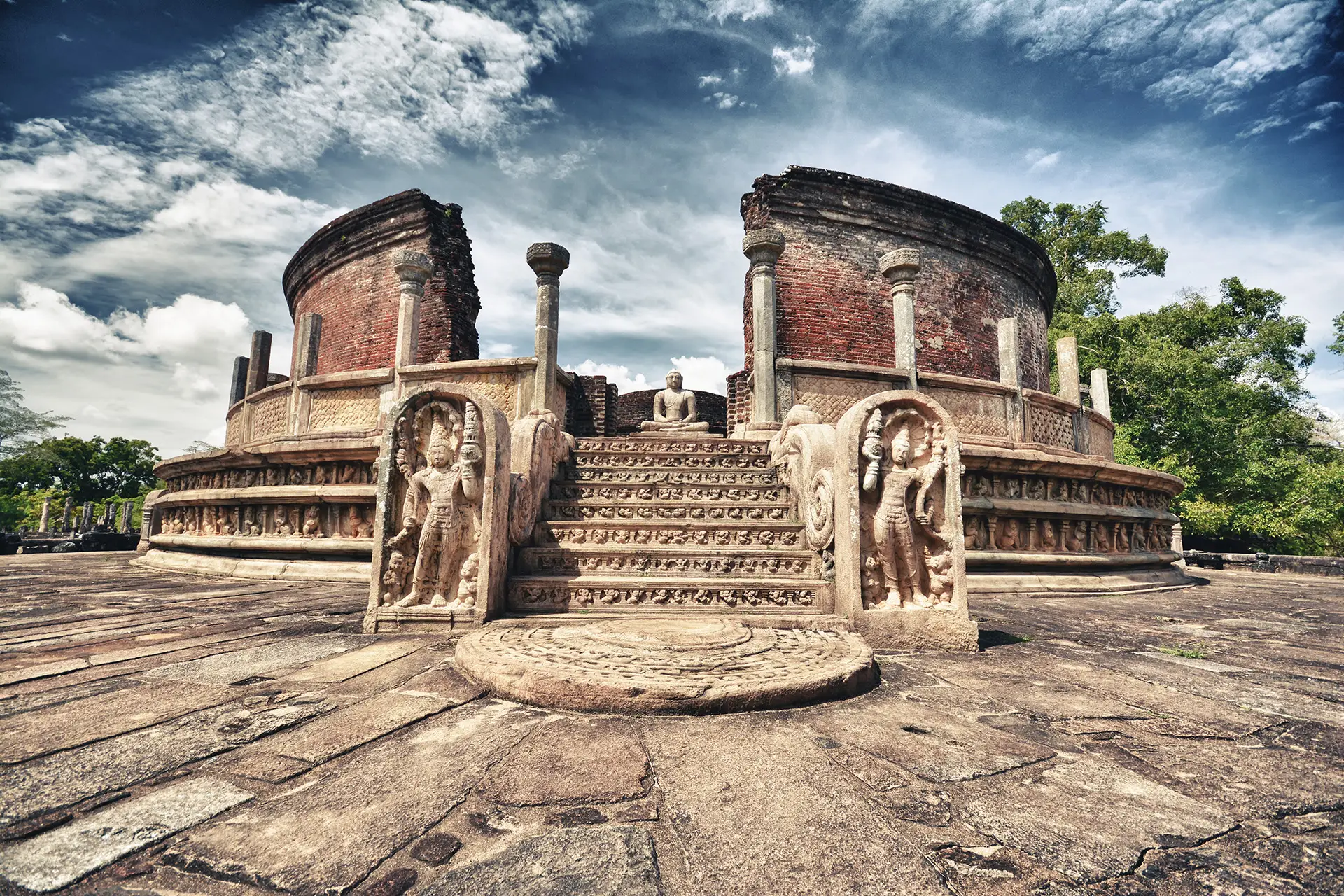
The Polonnaruwa Vatadage — a stunning circular relic at the heart of Sri Lanka’s ancient city
/ Credit: Walkers Tours
Essential Ancient Cities to Visit in Sri Lanka
Anuradhapura: Foundation of Buddhist Civilization
Anuradhapura was Sri Lanka’s first great capital and one of the most important cities in the ancient Buddhist world. Its spiritual center is the Sri Maha Bodhi, grown from the tree under which the Buddha attained enlightenment, making it the oldest historically recorded tree still alive. Monumental stupas such as Ruwanwelisaya, standing around 103 meters tall, and Jetavanaramaya, once the world’s tallest structure at approximately 122 meters, reflect the city’s immense scale, power, and devotion. Because of its vast area, Anuradhapura is best explored by tuk‑tuk or private transport, allowing time to absorb its quiet, sacred atmosphere.
Polonnaruwa: The Medieval Royal City
Polonnaruwa succeeded Anuradhapura as the capital and represents a more compact and refined phase of Sri Lankan urban design. The city is known for its elegant stonework, carefully planned monasteries, and the Gal Vihara, where serene Buddha statues are carved directly into granite rock. The nearby Parakrama Samudra reservoir illustrates the advanced irrigation systems that supported agriculture and prosperity. Polonnaruwa is ideal for travelers seeking a comprehensive ancient city experience within a single day.
Sigiriya: Royal Power on Stone
Sigiriya rises dramatically from the plains as a massive rock fortress built in the 5th century. Once a royal palace, it features landscaped water gardens, frescoes painted high on the rock face, and the polished Mirror Wall — a plastered surface once so reflective it is said to have mirrored the king’s image, now covered with ancient inscriptions and poems. Climbing to the summit reveals sweeping views and the remains of a palace that seamlessly blends architecture with natural rock formation. Sigiriya offers a striking contrast to Sri Lanka’s monastic cities, highlighting royal ambition rather than religious devotion.
Dambulla: Sacred Art in Stone
Dambulla is home to Sri Lanka’s most impressive cave temple complex. Hidden beneath a massive rock outcrop, the caves contain hundreds of Buddha statues and richly painted murals that span many centuries. Still used for worship today, Dambulla combines artistic achievement with uninterrupted religious practice. Its strategic location makes it a convenient base for visiting Sigiriya and other Cultural Triangle sites.
Kandy: Living Spiritual Capital
Kandy was the last royal capital before colonial rule and remains the spiritual heart of the country. The Temple of the Tooth Relic houses one of Buddhism’s most revered objects, drawing pilgrims from across the world continuously. Surrounded by forested hills and a central lake, Kandy blends royal history, sacred ritual, and natural beauty in a setting that feels vibrant and alive.
Planning Your Visit to the Cultural Triangle
The best months to explore Sri Lanka’s ancient cities are from January to April, when rainfall is low and temperatures are comfortable. Starting site visits early in the morning helps avoid heat and crowds. Modest dress is required in all sacred areas, and hiring licensed guides can greatly enhance understanding of the symbolism, history, and layout of each site. Many travelers choose to stay in Sigiriya or Habarana, which offer convenient access to multiple locations within short driving distances.
Beyond the Cultural Triangle
Outside the main circuit, Yapahuwa stands out as a lesser‑known rock fortress that briefly served as a capital in the 13th century. Its steep stone staircase and defensive position reflect a turbulent period in Sri Lankan history. On the southern coast, Galle Fort presents a different layer of heritage, where ancient trade routes meet European colonial architecture within a still‑inhabited fortified town.
Why Visit Sri Lanka’s Ancient Cities
Sri Lanka offers something rare: ancient cities that function as both archaeological treasures and active religious centres. The close proximity of multiple world‑class sites allows travelers to experience a wide range of history without long journeys. From sacred trees and towering stupas to rock fortresses and fortified cities, Sri Lanka reveals a civilization shaped by faith, engineering skill, and royal ambition.
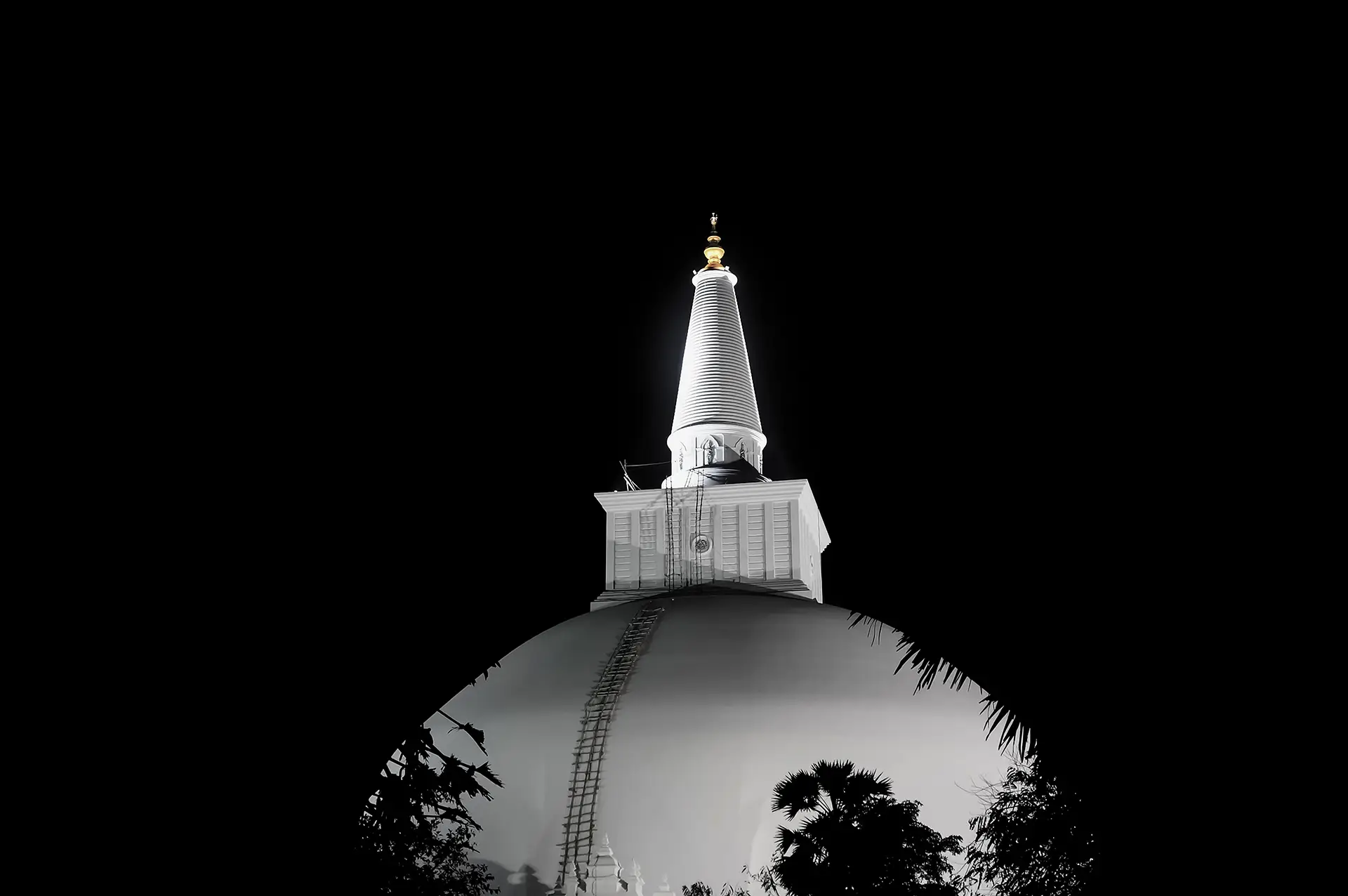
Ruwanwelisaya Stupa glowing under the night sky—a timeless beacon of faith, history, and devotion in Anuradhapura / Credit: Walkers Tours
Discover Sri Lanka’s Ancient Cities: Contact Walkers Tours Today for a Personalized Historical Journey!
Sri Lanka’s ancient cities are more than remnants of the past. They are places where history continues to shape daily life, belief, and identity. Exploring these sites offers not just sightseeing, but a deeper understanding of a civilization that has endured for millennia. With careful planning and cultural respect, travelers will find Sri Lanka’s ancient cities to be among the most meaningful historical destinations in the world.
Ready to experience the rich heritage of Sri Lanka’s ancient cities? Contact Walkers Tours for expert guidance and personalized itineraries that bring history to life!