
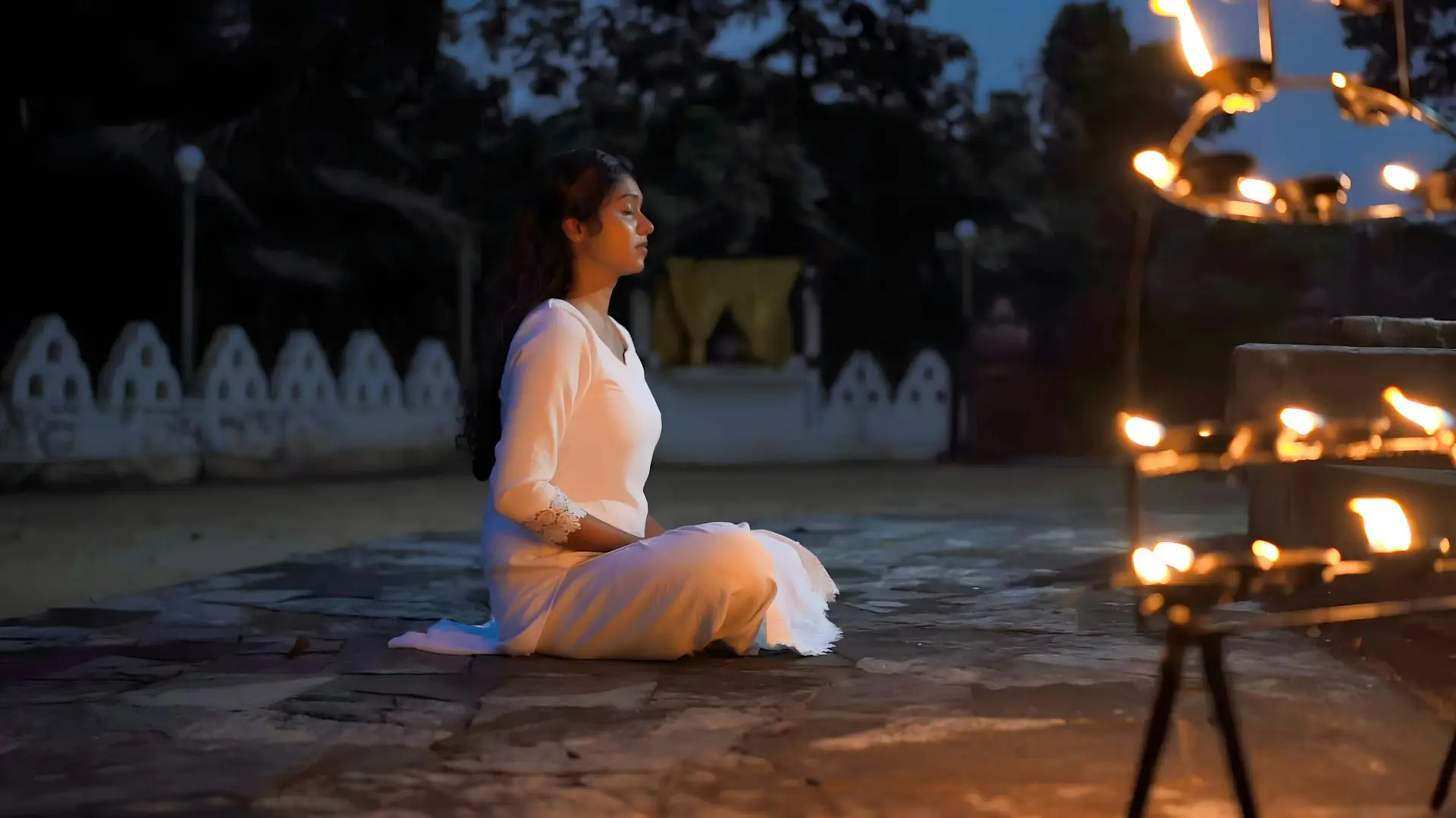
Finding stillness in the warm glow of Sri Lanka / Credit: Sidath Vimukthi
Sri Lanka’s spiritual heritage is far more than a preserved relic—it is a vibrant, living tradition that enriches wellness travel experiences today. Modern travelers are moving beyond passive sightseeing, seeking journeys infused with cultural depth and meaningful restoration. With over 2,500 years of continuous Buddhist civilization, Sri Lanka offers an authentic connection to both.
Key sites such as the Temple of the Tooth in Kandy, Nallur Kandaswamy Temple in Jaffna, and the Dambulla Cave Temple form the heart of this immersive spiritual journey. What sets these places apart is their living heritage. Take the Temple of the Tooth (Sri Dalada Maligawa) in Kandy, where the Thevava ritual—performed by drummers—takes place three times daily, just as it has for centuries. This is not a staged tourist performance but an unbroken devotional practice that visitors can witness repeatedly, each time deepening their sense of authenticity and spiritual intensity.
Similar sacred rituals continue throughout the island’s ancient cities, where monks chant at dawn amid ruins that predate many of the world’s most famous landmarks, creating a profound sense of timelessness and peace.
The focal point for this exceptional spiritual experience is Sri Lanka’s Cultural Triangle—an area enclosed by Anuradhapura, Polonnaruwa, and Kandy. These three cities serve as the economic and spiritual core of Sri Lanka’s heritage tourism.
The country’s appeal is growing rapidly, with 2,362,521 tourist arrivals recorded in 2025—a 15.1% increase from the previous year, according to the Sri Lanka Tourism Development Authority. Projections for 2026 anticipate further growth, fueled by rising global interest in cultural and wellness travel. Sri Lanka is also home to eight UNESCO World Heritage Sites, six of which are cultural landmarks that reflect this millennia-old spiritual narrative.
For travel advisors crafting wellness itineraries, the Cultural Triangle provides a strategic foundation. Within it, the eight sacred sites known as the Atamasthana compose the most spiritually concentrated pilgrimage circuit on the island. This is precisely where your clients’ transformative journey should begin.

Jaya Sri Maha Bodhi tree: The world’s oldest sacred tree / Credit: Walkers Tours

Ruvanvelisaya Dagoba: Peaceful glow at Sri Lanka’s majestic stupa / Credit: Walkers Tours

Lankarama Dagoba: A quiet retreat for solitude and inner peace / Credit: Walkers Tours

Isurumuniya: Ancient carvings in a serene, soulful setting / Credit: Walkers Tours
The Atamasthana: Exploring the Eight Sacred Sites of Anuradhapura
Anuradhapura’s Atamasthana—the eight sacred places in Sri Lanka—represent the island’s most concentrated cluster of Buddhist pilgrimage sites. Gaining a clear understanding of each location is essential for crafting itineraries that truly resonate with spiritually motivated travelers. Alongside other iconic sites like the Dambulla Cave Temple, these sacred places offer profound insights into Sri Lanka’s rich spiritual heritage.
The Atamasthana represent over two millennia of continuous devotion, attracting pilgrims from South and Southeast Asia. They offer wellness travelers a rare chance to experience living religious practices instead of just preserved archaeology. Understanding the unique character of each site is what turns a generic cultural stop into a truly transformative experience.
The eight sacred places are:
- Jaya Sri Maha Bodhi tree — the oldest historically documented tree on earth, grown from a cutting of the original Bodhi tree under which the Buddha attained enlightenment; a non-negotiable anchor for pilgrimage-focused clients
- Thuparama Dagoba (stupa) — the oldest dagoba on the island, said to enshrine Buddha’s right collarbone relic, making it the most sacred structure in Anuradhapura
- Ruvanvelisaya Dagoba — a towering white stupa whose scale commands quiet awe and works well as an early-morning visit
- Jetavanaramaya — once among the tallest structures in the ancient world, now a powerful symbol of Sri Lanka’s monastic ambition
- Abhayagiri Dagoba — a site of significant Mahayana influence, valued by clients interested in Buddhist doctrinal diversity
- Mirisavetiya Dagoba — built by King Dutugamunu and carrying strong associations with Sinhalese national identity
- Lankarama Dagoba — a quieter, less-visited site that suits clients seeking genuine solitude
- Isurumuniya — a rock temple celebrated for its intricate stone carvings, most notably the famous “Lovers” relief, which depicts an intimate couple in a scene of tender elegance that consistently enchants culturally curious travellers
The Jaya Sri Maha Bodhi tree holds a special emotional significance for pilgrimage visitors. It is worshipped daily, and the atmosphere is especially powerful at dawn, when devotees arrive with offerings of jasmine flowers and oil lamps. This moment of collective reverence is a unique experience that’s hard to find elsewhere in Sri Lanka. However, access to the tree’s inner enclosure is strictly controlled, so you should verify the latest visitor protocols before including this stop in any itinerary.
Isurumuniya, by contrast, appeals especially to those with an eye for aesthetics. Beyond the famous Lovers carving, the site includes a small museum and a natural rock pool, which together create a soothing and immersive experience. Visiting in the late afternoon is ideal, as the soft light over the surrounding tank fosters a truly contemplative atmosphere.
For advisors planning northern extensions, it’s important to recognize that Sri Lanka’s sacred geography extends far beyond Anuradhapura. Sites such as the Nallur Kandaswamy Temple in Jaffna highlight the island’s rich Hindu pilgrimage traditions and can provide meaningful additions to a multi-faith itinerary. The cultural diversity on display here rewards thoughtful sequencing, naturally leading into the central hill country—anchored by Kandy and Dambulla—which contributes its own distinct spiritual dimension to the journey.

Dambulla Cave Temple: A sacred space to pause and connect with spiritual energy on your wellness journey / Credit: Agnieszka Stankiewicz
Kandy and Dambulla: The Pillars of Central Sri Lanka
Kandy and Dambulla stand at the heart of Sri Lanka’s spiritual heritage, offering wellness-focused travelers a vivid and immersive experience of living Buddhist tradition. Together, these two sites provide a rich blend of emotional resonance and artistic grandeur.
The Dambulla Cave Temple, set in a tranquil environment, invites visitors into a world of ancient artistry and contemplative calm. This remarkable complex, inhabited by monks since the 3rd century BC, features five cave sanctuaries adorned with over 150 statues and some of Asia’s most extensive Buddhist murals. The intricately painted ceilings alone are worth a slow, focused exploration.
In Kandy, the Temple of the Tooth (Sri Dalada Maligawa) rises beyond its role as a place of worship. It symbolizes political legitimacy and national identity, deeply woven into Sri Lanka’s history. Legend has it that whoever holds the sacred relic possesses sovereignty over the island—a power that still resonates today. Nestled in Kandy’s picturesque lake district and recognized as a UNESCO World Heritage site, the temple draws both pilgrims and curious travelers alike.
A common question among visitors is whether the crowds at the Temple of the Tooth are worth it. The answer is a resounding yes—provided you choose the right time. The evening Puja ceremony, held around 6:30 pm, transforms the temple from a tourist attraction into a profoundly moving cultural experience. The rhythmic drumming, offerings, and flickering candlelight create an atmosphere that daytime visits simply cannot match.
Tips for Visiting:
- Plan your visit to Dambulla in the morning before the heat intensifies, then pair it with an afternoon transfer to Sigiriya.
- In Kandy, time your itinerary around the evening Puja ceremony rather than arriving midday, to experience the temple at its most evocative.
While the Atamasthana in Anuradhapura condenses much of Sri Lanka’s spiritual heart, Kandy and Dambulla offer greater accessibility, making them essential highlights in most 10- to-14-day wellness itineraries. However, Sri Lanka’s spiritual landscape extends well beyond the Cultural Triangle—the northern and eastern regions resonate with a distinct devotional energy, shaped more by Hindu tradition than Buddhist pilgrimage.
Together, Kandy and Dambulla provide a compelling window into the island’s rich Buddhist heritage, balancing history, art, and living tradition in ways that captivate any traveler seeking wellness and spiritual depth.

The towering 33-foot statue of Lord Shiva welcomes visitors to the sacred Koneswaram Temple in Trincomalee / Credit: Nadun Ranasinghe
Beyond the Triangle: The Hindu Shrines of the North and East
Sri Lanka’s famous Cultural Triangle—Anuradhapura, Kandy, Dambulla—only tells part of the island’s rich spiritual story. Equally powerful sacred spaces are found in the north and east, particularly in Jaffna and Trincomalee, where a Dravidian architectural tradition creates a profoundly different sensory and spiritual experience.
The Nallur Kandaswamy Temple in Jaffna stands as the most compelling example. Dedicated to Lord Murugan, its towering gopuram—the ornate gateway tower emblematic of South Indian temple design—rises in vibrant tiers of sculpted deities. This temple draws hundreds of thousands of devotees annually, especially during the vibrant 25-day Nallur Festival.
Further east, Koneswaram Temple in Trincomalee offers something even rarer: a fusion of sacred architecture and breathtaking natural beauty. Perched atop Swami Rock, a dramatic promontory that plunges into Trincomalee Harbour, this classical-medieval Hindu temple is one of the Pancha Ishwarams—the five sacred abodes of Shiva in Sri Lanka.
Sri Lanka’s spiritual identity is far more pluralistic than most wellness itineraries suggest, and the Hindu temples of the north and east provide some of the strongest evidence of this depth. Sites like the Nallur Kandaswamy Temple offer a captivating glimpse into this rich tradition.
Integrating these northern and eastern sites into a standard 10- to-14-day itinerary requires thoughtful planning. Jaffna is about six hours north of Colombo via expressway and train, while Trincomalee lies roughly four to five hours east. A practical approach is to treat the northern leg as a dedicated 3- to-4-day extension after completing the Cultural Triangle, flying from Colombo’s Bandaranaike International Airport to Jaffna to save travel time. For travelers beginning or ending their journey in Colombo—perhaps visiting the multi-faith Gangaramaya Temple—Colombo serves as a convenient staging point before heading north.
It is important to note a candid caveat: although infrastructure in the north has steadily improved since the end of the civil conflict, it remains less developed than in the south. In some areas, poor road conditions can significantly extend travel times, sometimes by as much as 30%. Accommodation options are also limited, and journeys along eastern routes may be unpredictable. However, for wellness travelers seeking authentic spiritual encounters rather than comfort-focused tourism, this rawness often enhances the experience, creating the kind of stillness and reflection less accessible at more heavily visited sites.

Finding peace and wellness where ancient serenity meets Colombo’s vibrant energy / Credit: Alexey Turenkov
Colombo: The Gateway to Spiritual Wellness
Colombo serves as a vibrant gateway to Sri Lanka’s journey toward spiritual wellness. At its heart lies the Gangaramaya Temple, a unique fusion of architectural styles and a bustling center of spiritual activity. More than just a place of worship, the temple also functions as a hub for cultural learning and community service. Visitors can participate in meditation sessions and explore the temple’s museum, which houses a fascinating collection of Buddhist artifacts. As an accessible introduction to the island’s rich spiritual traditions, the Gangaramaya Temple is an essential stop for anyone beginning their wellness journey in Sri Lanka.

Still moments beneath the Bodhi tree at Colombo’s Gangaramaya Temple—a mindful start to your Sri Lanka journey/ Credit: Zoshua Colah
Integrating Wellness: Meditation and the Monastic Tradition
In Sri Lanka, the monastic tradition isn’t just a backdrop for wellness travel — it is the very essence of the experience. Travel advisors who grasp this crucial distinction consistently unlock higher-value bookings by offering something truly unique.
Meditation plays a central role in the development of spiritual tourism in Sri Lanka, offering a distinctive asset for travelers seeking meaningful experiences. Central to this is the notion of a “certified human asset”: well-trained guides such as monks, experienced practitioners, or resident scholars who do much more than facilitate; they are integral to the journey itself. Their authenticity and expertise deeply enrich the traveler’s engagement, making the experience transformative rather than simply a tour.
With over 20 registered meditation centres spread across the country—many located within or near active temple complexes—Sri Lanka is well-equipped for more than passive sightseeing. Visitors can engage in carefully structured, immersive programs: joining morning chanting, practicing guided silent walks, or participating in breath-work sessions led by resident monastics. From forest hermitages near Dambulla to tranquil retreat centres by the Koneswaram Temple in Trincomalee, the geographic variety supports multi-centre wellness itineraries within a single trip.
Rather than generic “temple tours,” what resonates more deeply is a respectful glimpse into monastic life—a timed, authentic window into the daily rhythms of these spiritual communities. Experiences like pre-dawn offerings, communal dana (alms giving), and guided meditation sessions are valuable because they are limited and require special access. This sense of scarcity becomes a powerful selling point.
The true value lies in advisors’ deep understanding of how to present these experiences: the appropriate attire, respectful behavior, and which sites hold the greatest cultural significance. This nuanced knowledge is what sets informed advisors apart and delivers unmatched client experiences.

Experiencing deep presence at Kandy’s Temple of the Tooth Relic, a sacred sanctuary for mind and soul / Credit: Chathura Anuradha Subasinghe
The Bottom Line: Essential Advisor Knowledge for Temple Visits
Creating an effective Sri Lanka itinerary relies on essential principles that turn a typical cultural tour into a truly transformative experience.
Respecting sacred protocols is just as crucial as choosing the right sites. The Atamasthana—the eight great places of Buddhist veneration—form the spiritual core of any heritage itinerary. Clients who arrive without understanding the significance of these pilgrimage sites often miss the deeper meaning of what they see. Advisors who take the time to educate travelers on the importance of the Atamasthana consistently report higher client satisfaction and increased repeat bookings to Sri Lanka.
Strict adherence to dress codes is essential. Visitors must wear modest clothing that covers shoulders and knees at all religious sites, including Buddhist temples, Hindu kovils, and mosque precincts. Failing to prepare clients properly can lead to denied entry and unintended cultural offenses. It’s best to incorporate these guidelines into pre-departure materials rather than leaving them to local guides to communicate on arrival.
Sri Lanka’s Cultural Triangle—anchored by Anuradhapura, Polonnaruwa, and Sigiriya—remains the top heritage destination for first-time visitors, offering a clear narrative from ancient civilization to contemporary practice. For returning clients, wellness and meditation programs integrated into temple visits are the fastest-growing upsell opportunities. Identifying and partnering with qualified local providers to deliver these experiences at the standard your clients expect is the logical next step—one that deserves as much attention as site selection itself.

Walking mindfully, Buddhist monks traverse Sri Lanka’s lush, tranquil landscapes /
Credit: Sidath Vimukthi
Sourcing the Right Partners for Sri Lankan Heritage
Delivering wellness travel itineraries in Sri Lanka at the level clients expect requires more than general knowledge. It requires trusted local access, cultural understanding, and operational expertise.
When itineraries go beyond the popular routes to include remote shrines, forest hermitages, and active pilgrimage sites, the right destination management company (DMC) is essential. Many sacred locations are managed by monastic communities, subject to ceremonial calendars, or difficult for general operators to access. An experienced local partner can help arrange appropriate visits, prepare travellers on local customs and dress expectations, and prevent avoidable issues during the journey.
The strength of any Sri Lanka itinerary depends on its supplier relationships. Travel advisors creating wellness and heritage programs need partners who understand the difference between a standard meditation activity and meaningful contact with Sri Lanka’s living Buddhist and cultural traditions.
Walkers Tours is a Sri Lankan DMC with the local knowledge and on-the-ground support needed to create thoughtful, well-managed heritage and wellness experiences. Their team can help travel advisors build programs that combine cultural depth, practical logistics, and the level of service discerning clients expect.
Find out more about Walkers Tours and start planning distinctive Sri Lanka heritage itineraries today.