
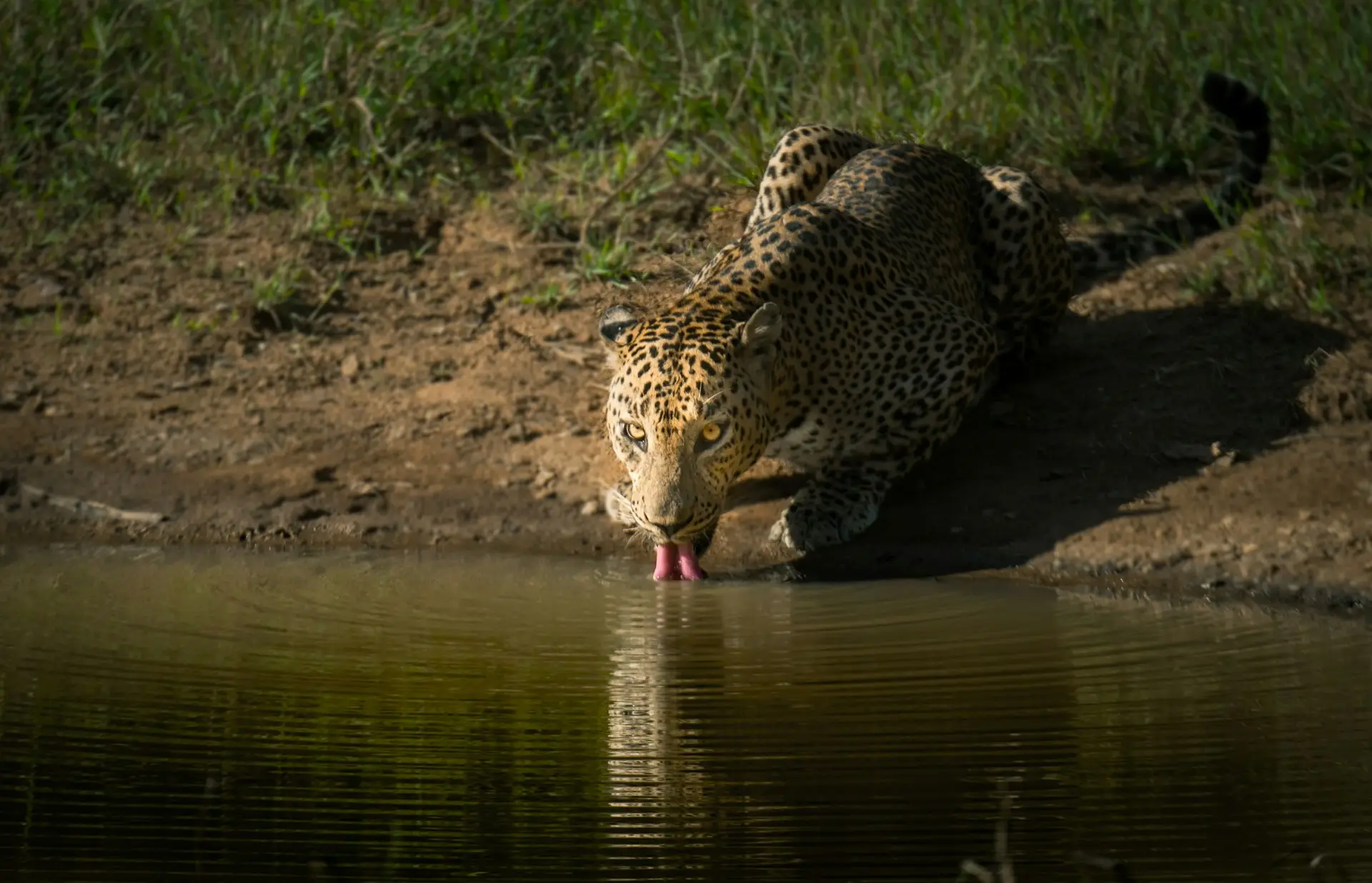
Unlike leopards elsewhere in the world, the Sri Lankan leopard doesn’t have to share its kingdom with lions or tigers; here, it
reigns supreme / Credit: Udara Karunarathna
Sri Lanka offers one of the most biodiverse wildlife experiences on the planet, and the travel industry is just beginning to take notice.
Sri Lanka’s biodiversity is exceptional, especially given the island’s relatively small land area. Approximately 16% of Sri Lanka’s animal species and 23% of its flowering plants are endemic, meaning they are found nowhere else on Earth. This remarkable level of endemism underscores Sri Lanka’s status as one of the world’s most important biodiversity hotspots. The island is globally recognized for its unique species, making it a standout destination for wildlife encounters beyond those offered by traditional safari regions.
For decades, the classic African safari has defined the premium wildlife category. However, the Big Five framework, while compelling, tells only one story. Sri Lanka offers a different experience: an island where unique endemic wildlife, ancient UNESCO-listed heritage sites, and compact geography come together in a single, efficient itinerary.
Covering roughly 65,000 square kilometers, Sri Lanka’s size is comparable to New Brunswick in Canada or West Virginia in the USA, facilitating compact and accessible travel itineraries. Key wildlife habitats such as leopard territories, elephant corridors, significant cultural heritage sites, and coastal wetlands generally lie within a few hours’ drive of each other, allowing travelers to experience diverse attractions without long overland transfers.
When North American travelers consider Southeast Asian destinations, they often weigh beaches and culinary scenes against wildlife and cultural heritage. Sri Lanka stands out by offering all these elements along with excellent value and compact access to leopard habitats, elephant corridors, ancient temple complexes, and coastal wetlands—all within a few hours’ drive.
That combination is the key selling point every Sri Lanka safari operator and travel advisor should highlight: this destination offers both nature and culture. Unlike East African circuits, it avoids long, exhausting transfer distances. The following sections explain where to position clients for the best wildlife encounters, starting with the leopard parks.

A Sri Lankan leopard cooling off by the water in Wilpattu National Park / Credit: Udara Karunarathna
The Leopard Logic: Navigating Yala vs Wilpattu for High-Value Sightings
Sri Lanka’s two main leopard parks attract very different types of visitors. Understanding this difference is one of the most valuable insights a travel advisor can provide.
Yala National Park’s Block 1 is widely regarded as having one of the highest leopard densities globally, with scientific estimates ranging from approximately 12 to 17 leopards per 100 square kilometers during peak periods. Note that Yala National Park is divided into multiple blocks, with Block 1 being the principal area open for tourism and also where the highest leopard densities and most consistent sightings occur. Specifying “Yala Block 1” helps avoid confusion, as other blocks have more restricted or limited public access. This reputation makes Yala a premier destination for big-cat enthusiasts. For clients who want near-guaranteed sightings in a dramatic landscape of granite boulders and coastal scrubland, Yala delivers with remarkable consistency.
Wilpattu National Park, the largest in Sri Lanka, offers a contrasting safari experience, featuring characteristic natural lakes known as villus, dense forest cover, and generally fewer visitors, resulting in a more secluded and tranquil wilderness outing. Wildlife sightings here are less predictable, but the solitude is genuine, making Wilpattu a preferred choice for luxury travelers prioritizing privacy.
The prime wildlife viewing seasons correspond with the dry periods when animals concentrate around shrinking water sources: February to July for Yala and May to September for Wilpattu. Morning drives are recommended since leopards tend to be more active in cooler hours, enhancing the likelihood of sightings. Advising clients to book the earliest jeep entry slot maximizes their chances.

Majestic leopard prowling through the wild beauty of Yala National Park / Credit: Geoff Brooks
Advisor Tip: While Yala Block 1 frequently claims one of the highest densities of wild leopards worldwide, actual numbers may fluctuate, so framing it as “one of the highest” is advisable. Visitor caps and jeep quotas are imposed to manage congestion, but during peak seasons, crowds may still diminish the sense of solitude for discerning travelers. However, it is important to note that government regulations impose jeep quotas and visitor limits to manage overcrowding. During peak seasons these limits may still result in busy conditions, which can affect the sense of solitude for some travelers.
For clients wanting to see elephants without the higher cost of leopard sightings, an Udawalawe National Park safari offers a more relaxed, year-round option. Udawalawe is renowned for reliable year-round elephant sightings, offering a more elephant-focused experience compared to big-cat-centered parks like Yala. It is more accurate to describe Udawalawe as a key site for consistent elephant viewing rather than simply an “elephant park,” since it also supports diverse mammals, birds, and other wildlife. The Elephant Transit Home within Udawalawe serves as a respected rehabilitation center where orphaned calves are cared for and later released into the wild. Importantly, visits to the Transit Home are strictly observational, with no elephant riding or performances, aligning with ethical wildlife tourism practices.

There’s nothing like the thrill of a gentle giant confidently walking right past your safari jeep /
Credit: Tom Paisley
Timing ‘The Gathering’: Minneriya’s Elephant Spectacle and Heritage Pairings
The Minneriya elephant gathering, often called “The Gathering,” typically occurs between August and October, a timeframe that conveniently aligns with the North American summer vacation season.
During this period, several hundred wild Asian elephants congregate on the drying shores of Minneriya Reservoir, drawn by fresh forage growth as the water recedes. This event represents the largest recurring aggregation of wild Asian elephants in the world. Travel experts and guidebooks consistently highlight the spectacle as a must-see wildlife event in Sri Lanka and greater Asia, unmatched by any similar elephant congregations in East Africa.
What sets Minneriya apart from other wildlife attractions is its location. According to the Sri Lanka Tourism Development Authority, the UNESCO-listed Ancient City of Polonnaruwa lies nearby, enabling practical day-trip combinations that blend cultural exploration and wildlife viewing. Visitors can explore moonstone-carved temple ruins in the morning and watch elephant herds gathering at dusk—a pairing that strongly appeals to culturally curious travelers.

A mother elephant caring for her newborn along the lush edge of the Udawalawe Reservoir /
Credit: Riccardo Chiarini
Advisor Note: The elephant gathering at Kaudulla National Park is closely linked seasonally and often combined with Minneriya in extended safari itineraries, broadening the wildlife spectacle options.
For clients traveling outside the August-to-October window, Udawalawe National Park functions as the dependable year-round alternative. Elephant sightings here remain consistent across seasons, aided by open scrubland terrain conducive to excellent viewing. The Elephant Transit Home adds an ethically meaningful component, as described earlier.

A pod of spinner dolphins surfacing in the Indian Ocean off the coast of Sri Lanka /
Credit: Egle Sidaraviciute
Logistics for Travel Advisors: Suppliers, Seasons, and Sustainability
Translating Sri Lanka’s wildlife promise into a flawless client experience depends almost entirely on operational decisions made before departure. The most memorable encounters with nature occur seamlessly when logistics are meticulously planned and executed.
Vetted local DMCs are essential for delivering a premium safari experience. Safari jeep quality varies greatly across Sri Lanka’s parks, and a poorly maintained vehicle combined with an inexperienced tracker can spoil even the most impressive sighting. Verified Sri Lankan suppliers provide travel advisors with reliable partners offering well-maintained 4x4s, licensed naturalist guides, and responsible park entry management. Travel advisors should also confirm with their local DMC current park closures and peak wildlife viewing times, as these can vary due to environmental and operational factors. When choosing between options like Yala and Wilpattu for leopard sightings, the right DMC will help clients understand differences in leopard density and visitor volume—facilitating the best match to the client’s travel style.
Beyond selecting the right operator, timing is equally vital to maximizing wildlife encounters. Seasonal planning is another critical variable. Sri Lanka experiences two major monsoon seasons that influence wildlife viewing and regional accessibility: the southwest monsoon (May to September), which affects the West and South coasts, and the northeast monsoon (December to February), which primarily impacts the East coast.
The table below provides a practical quick reference.
|
Month |
Best Region |
Best Park / Wildlife Highlights |
|
January – March |
West Coast, South Coast & Hill Country |
Yala, Udawalawe, and Mirissa (peak Blue Whale watching) |
|
April (Transition) |
Cultural Triangle (low crowds) |
Udawalawe (reliable elephants), Minneriya & Kaudulla (pre-gathering phase) |
|
May – August |
East Coast & North Central Dry Zone |
Yala (Peak leopard sightings), Wilpattu, Minneriya & Kaudulla (Elephant Gathering building up) |
|
September |
North Central Dry Zone |
Minneriya & Kaudulla (Peak Elephant Gathering); Note: Yala Block 1 is typically closed for rejuvenation |
|
October – November |
Unpredictable Monsoons (avoid heavy beach bookings) |
Udawalawe (highly reliable year-round); Wilpattu remains open; Yala reopens mid-October |
|
December |
West & South Coast (starts late in the month) |
Yala National Park, Udawalawe, and Wilpattu (lush green landscapes, migratory birds arrive) |
Whale watching from Mirissa typically peaks between December and March, coinciding with the dry season along the southern coast and complementing the optimal wildlife viewing windows outlined above. Aligning travel plans with these seasonal patterns ensures clients experience the diverse natural highlights Sri Lanka offers, from majestic leopard sightings to spectacular marine life.
Equally important is integrating sustainability into the client journey. Parks such as Udawalawe exemplify commitment to conservation through initiatives like the Elephant Transit Home, reinforcing the country’s dedication to responsible tourism. Framing these conservation efforts within the booking narrative not only builds client trust but also adds meaningful value that justifies premium pricing. Clients who connect emotionally with conservation stories tend to appreciate their experiences more deeply, promoting repeat bookings and advocacy for sustainable travel.

A mother and infant Toque macaque, an Old World monkey endemic to Sri Lanka /
Credit: Antonio Cogo

A loud, proud, and vibrant male peacock / Credit: Adithya Ramakrishnan
The Bottom Line: Key Takeaways for Your Next Sri Lanka Booking
Sri Lanka’s combination of endemic wildlife, ancient heritage, and compact geography makes it one of the most compelling excursion recommendations a travel advisor can offer today.
Sri Lanka is more than just another safari destination — it’s a rare biodiversity hotspot rewarding careful planning. With approximately 16% faunal endemism, the island offers wildlife encounters found nowhere else, presenting a unique selling point no typical East African itinerary can match.
Timing and park selection differentiate expert advisors. The Minneriya Elephant Gathering, peaking from August to October, attracts hundreds of elephants to a single reservoir—a spectacle alone justifying booking. Yala Block 1 boasts one of the highest densities of wild leopards globally, making sightings genuinely likely rather than hopeful.
Same-day heritage and wildlife combinations are logistically sound. UNESCO-listed sites such as Sigiriya and Polonnaruwa lie within reasonable driving distance of active national parks. The recommended approach is typically a morning cultural visit followed by an afternoon game drive—a format specialist operators incorporate into verified itineraries.
Finding the right ground operator is the final critical piece. This is where a dedicated trade resource becomes indispensable—ensuring seamless logistics, expert local knowledge, and unforgettable client experiences.

Daily bathing ritual at the Pinnawala Elephant Orphanage in Sri Lanka / Credit: Shashank Hudkar
Partner with Walkers Tours for Unforgettable Sri Lanka Safaris
Bring Sri Lanka’s incredible wildlife and rich cultural heritage to your clients with Walkers Tours, your trusted local expert. With premium vehicles, experienced naturalist guides, and seamless logistics, Walkers Tours offers spectacular leopard sightings, impressive elephant gatherings, and immersive heritage experiences.
Don’t miss the chance to create unforgettable safari tours featuring Yala, Wilpattu, Minneriya, and more. Contact Walkers Tours today to customize a personalized itinerary and gain exclusive access to Sri Lanka’s new safari frontier. Book now to make your clients’ next wildlife adventure truly exceptional!